An oil change should be more than draining old oil, spinning on a new filter, and sending the car back out. It is one of the best times to catch small problems because the vehicle is already in the shop and several important areas are easy to check while it is being serviced.
We see plenty of issues that have nothing to do with the oil itself but show up during routine service. A small coolant leak, low tire pressure, worn belt, or dirty air filter is easier to deal with before it becomes a breakdown. These six checks should be part of a good oil change visit.
1. Check All Major Fluid Levels
Engine oil gets the attention, but you shouldn't ignore the other fluids. Coolant, brake fluid, transmission fluid where it is serviceable, power steering fluid on vehicles that still use hydraulic steering, and washer fluid all deserve a look.
The level can tell us a lot. Coolant that keeps dropping can point to a leak. Low brake fluid can happen as the pads wear, but a sudden drop also calls for checking for hydraulic leaks. If a fluid is low, we want to know why instead of simply topping it off and moving on.
2. Inspect the Tires and Set the Pressure
Tire pressure changes with temperature and slowly drops over time. An oil change is a good chance to correct all four tires before low pressure starts affecting wear, fuel economy, or handling.
We also look at the tread while the car is in the air. Inner-edge wear, cupping, cracking, or one tire wearing much faster than the others can point toward alignment, suspension, or rotation issues. During an inspection, we compare the tires instead of looking only at the easiest section of tread from outside the vehicle.
3. Look for Fluid Leaks Under the Vehicle
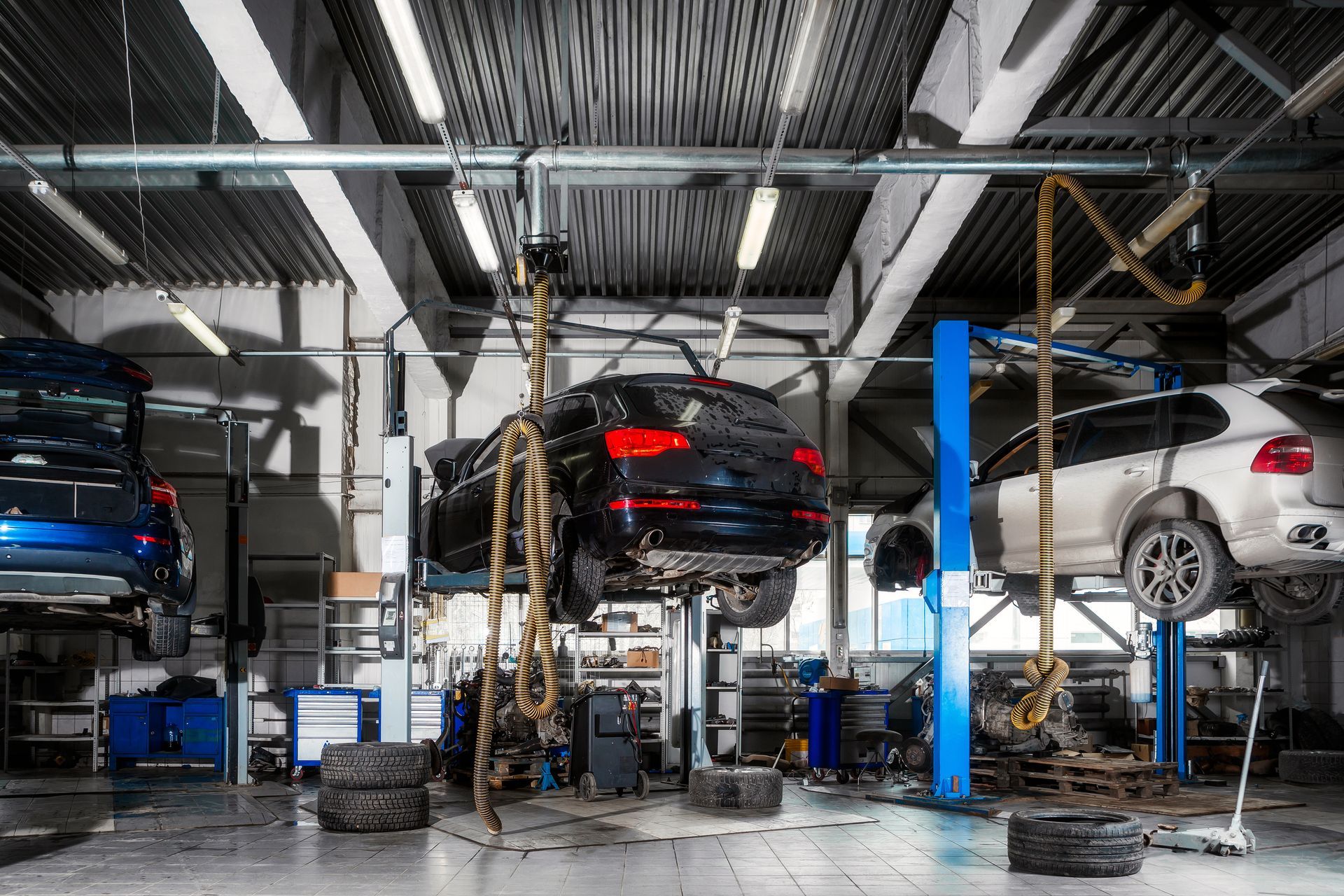
A vehicle on a lift gives us a much better view of leaks than a quick look from above the engine. We check around the oil pan, drain plug, filter area, transmission, cooling system, and other visible components.
A little seepage is not the same as an active leak, and that distinction matters. We are more concerned when fluid is wet, collecting on shields, leaving drops, or lowering the level between services. Catching an oil or coolant leak early often keeps the repair smaller and gives you time to plan it instead of finding out after a warning light comes on.
4. Check Belts, Hoses, and Visible Rubber Parts
Belts and hoses live in a hot engine compartment, so age eventually catches up with them. Heat makes rubber hard, brittle, swollen, or cracked depending on the part and type of failure.
We check the serpentine belt for fraying, damaged ribs, glazing, and contamination from leaking fluids. Coolant hoses get a look for swelling, cracking, soft spots, or dried coolant around connections. If a weak tensioner or misaligned pulley is damaging a belt, replacing only the belt does not solve the real problem, so we pay attention to the complete drive system.
5. Check the Brakes While the Wheels Are Easy to See
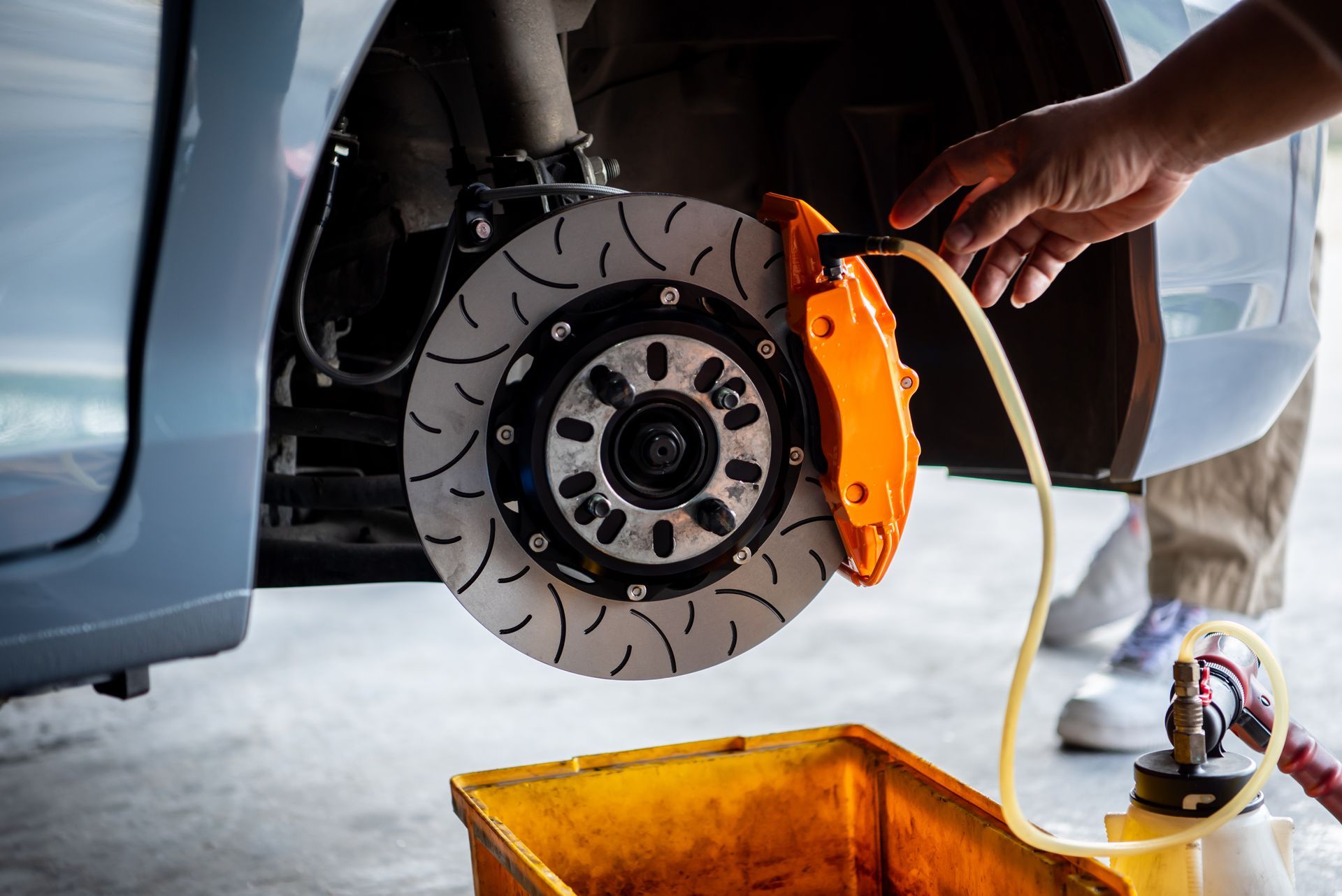
You don't need a full brake job every time you get an oil change, but you should have a sense of how much brake life is left. Depending on wheel design and vehicle access, we can often get a useful look at pad thickness, rotor condition, and obvious brake-fluid leaks during routine service.
If the pads are getting low, we would rather tell you before they start grinding. We also watch for uneven wear from side to side because one thin inner pad can indicate a sticking caliper or seized slide even when the outer pad still looks acceptable. That kind of wear is easy to miss if nobody checks until the brakes become noisy.
6. Inspect Filters, Battery Condition, and Basic Under-Hood Items
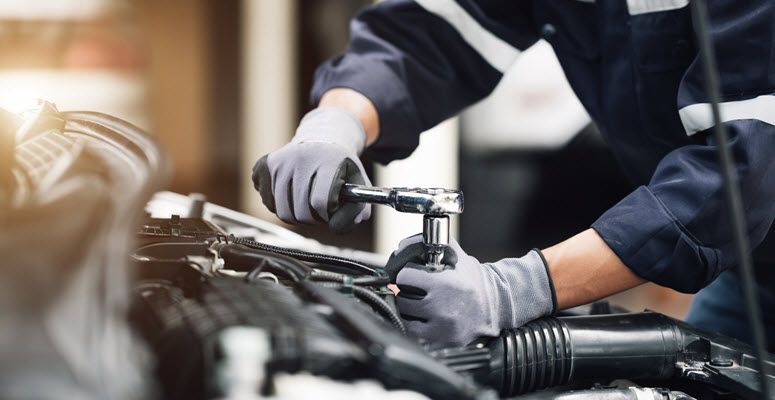
The engine air filter and cabin filter do not need replacement at every oil change, but they should be checked based on condition and service history. A heavily restricted engine filter can reduce airflow, while a dirty cabin filter can weaken airflow through the vents and put more strain on the blower system.
We also give the battery and under-hood area a practical once-over. Corrosion at the battery terminals, a loose connection, damaged wiring, or obvious rodent damage can turn into a no-start or electrical problem later. Regular maintenance works best when you do these small checks consistently instead of waiting for something to fail.
Get Oil Change Service In Royal Oak, MI, With Autohaus Service & Sales
If your vehicle is due for an oil change, Autohaus Service & Sales in Royal Oak, MI, can service the engine oil and filter while checking the tires, fluids, brakes, belts, hoses, leaks, and other basic wear areas.